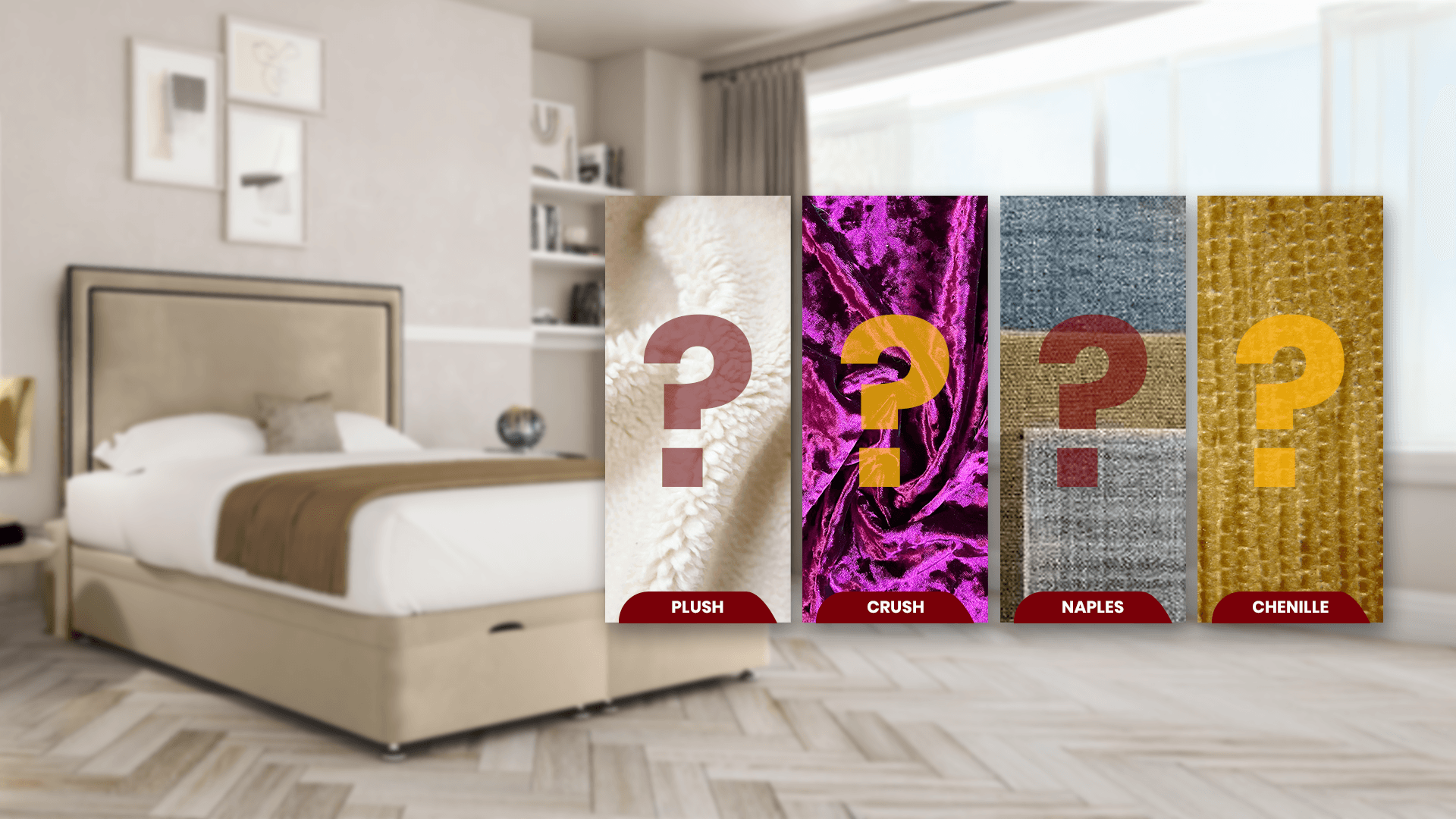
Fabric beds can change how a bedroom feels before you even think about mattress firmness, storage, or frame size. The fabric affects texture, warmth, cleaning, colour depth, and how the bed holds up to everyday life, especially if you have children, pets, dust, sunlight, or a humid room.
That is why choosing the right upholstery should start with how you use the room, not just colour. A pale plush headboard may look calm and expensive in a photo, but it needs more care than a darker chenille fabric bed or a smoother Naples finish. If you are choosing between upholstered divans, ottomans, and bed frames, a safer approach is to match the fabric to your household first, then choose the shade and style.
At The Bed Village Yorkshire, we offer upholstered fabric beds in different finishes so customers can choose a bed that suits the room and how it will actually be used.
Different Types Of Fabric Beds and How They Feel
Not all fabric beds feel the same. Some are smooth and soft, others have a deeper pile, and some have a more visible texture. The finish affects how the bed looks in changing light, how it feels to lean against, and how much everyday dust, lint, or pet hair it shows.
| Fabric | How It Feels | Best For | Risks |
|---|---|---|---|
| Plush | Soft, smooth, cosy, and velvet-like | Warm bedrooms, softer interiors, and buyers who want a tactile finish | May show pressure marks, lint, or pile movement depending on colour and light |
| Crush / Crushed Velvet | Shiny, textured, and more dramatic, with a crushed pile effect | Statement bedrooms and buyers who like a reflective finish | The crushed look is part of the style, so it will not appear flat or uniform |
| Naples | Smoother, neater, and more structured in feel | Busy bedrooms where a cleaner everyday upholstery look is preferred | Product-specific cleaning and durability details should be checked before purchase |
| Chenille | Soft, woven, warm, and slightly textured | Cosy bedrooms, family rooms, and buyers who want a more relaxed woven feel | Texture can hold dust or hair differently from smoother fabrics |
Crushed velvet is often simply called crushed velvet upholstery or crush fabric. The name comes from how the pile is pressed or patterned, creating a reflective, slightly rippled look.
Chenille feels different because it is typically softer and more woven in character. Velvet, including plush and crushed finishes, tends to feel smoother and reflect light more strongly. Chenille has a warmer, more textured feel, which is why many people prefer it for bedrooms that need softness without a glossy finish.
How To Choose The Best Type Of Material For Your Bed
The best bed material is the one that suits your room, habits, and tolerance for upkeep. Start with five practical questions:
- Will pets sleep near the bed? If yes, consider hair visibility, potential claw marks, and how easily the surface can be vacuumed.
- Will children use the room? If yes, darker or mid-tone fabrics are usually more forgiving than cream or very pale shades.
- Does the bed sit in direct sunlight? Strong sun can fade some colours over time, so it helps to check samples before ordering.
- Is the room dusty or humid? Light-coloured fabric may need more frequent cleaning in rooms where dust settles quickly.
- Will the headboard be used every day? If you sit up to read, work, or watch TV, the headboard fabric matters as much as the frame.
Physical samples make this much easier. A colour that looks warm online can seem cooler in a north-facing bedroom, and a texture that feels subtle in photos can look much richer in person. Before choosing your bed fabric, consider ordering free fabric samples and comparing them with your bedding, flooring, curtains, and wall colour.
If you want a bed that suits a specific room style rather than a standard look, our custom made beds page is a useful place to start.
Best Upholstery Fabric for Beds With Dogs And Cats
For homes with dogs and cats, the best fabric choice usually comes down to visible the fur will be, how easy the bed is to vacuum, and the surface texture. There is no truly “pet-proof” fabric, but some options are easier to live with than others.
A smoother upholstery finish is often quicker to vacuum because hair is less likely to work deep into the surface. Mid-tone colours can also be more forgiving than very pale cream or very dark shades, especially if shedding is heavy. If a dog or cat rubs against the base, jumps onto the mattress, or sleeps near the headboard, test a sample with lint, dust, or pet hair before ordering.
In terms of fabric types:
- Velvet-style fabrics can look beautiful, but may show pressure marks, pile direction, or lint depending on the colour and lighting.
- Chenille can feel warmer and more textured, but the weave may need more regular vacuuming, especially in pet-heavy rooms.
- Naples-style finishes may suit buyers who want a cleaner everyday look, but the best choice still depends on the specific product and fabric option.
Keep one simple rule in mind: if pets are part of the bedroom, choose a fabric you can maintain on a normal weekday, not one that only looks perfect on delivery day.
Is Velvet Bed Frame Hard to Clean and Maintain?
A velvet bed frame is not automatically hard to clean, but it does require realistic expectations. Plush and crushed velvet finishes can show pile movement, pressure marks, lint, and subtle shade changes as light catches the surface. That is part of the look, not always a fault.
For everyday care, gentle, regular vacuuming with an upholstery attachment is usually the safest starting point. Avoid scrubbing the fabric, as this can disturb the pile. If you choose a light velvet or cream fabric bed, expect to clean it more often, especially in rooms with open windows, higher dust levels, pets, or children.
Crushed velvet can be more forgiving because the texture is already varied, so it does not need to look perfectly flat. Plush can feel smoother and more uniform, but that also makes marks and pile direction easier to notice.
If you want the charm of fabric beds without too much upkeep, it’s best to compare samples first in the room before choosing.
Easiest Fabric Bed Base to Clean that UK Buyers Should Consider
The easiest fabric bed base to clean is usually one with a smoother finish, a forgiving colour, and minimal deep texture for dust or hair to settle into. In UK homes where windows are often closed during damp months, dust and moisture can make pale upholstery look tired more quickly if it is not maintained.
Cream can still work beautifully. Where possible, keep it away from heavy daily contact, vacuum it regularly, and avoid placing it in a room where damp air or dust builds up without ventilation. In a high-humidity room, a light-coloured bed fabric will need more attention than a mid-tone option. For wider home-care context, the government’s indoor moisture guidance explains why damp and mould risks should be taken seriously in the home.
If the bedroom is used less often, such as a guest room, you can take more style-led risks. A softer or lighter finish may stay looking fresh for longer when the bed is not used every day. Our guide to fabric beds for guest rooms is a useful next read if you’re buying a bed mainly for visitors.
How to Maintain Fabric Beds
Good maintenance comes down to small, regular habits. Fabric beds do not have to be difficult to care for, but they usually need more attention than plain wooden or metal frames because dust, lint, hair, and marks can sit on the upholstery.
- Vacuum the headboard and frame regularly using a soft upholstery attachment, especially along seams, corners, and the top edge of the headboard
- Blot spills quickly with a clean, dry cloth instead of rubbing, as rubbing can push liquid deeper into the fibres or disturb the pile
- Check the care guidance for your specific fabric before using any cleaning product, particularly on plush, crushed velvet, chenille, or lighter colours
- Keep the bed away from strong, direct sunlight where possible, as some colours can fade or shift in tone faster in bright light
- Rotate cushions, throws, and bedding contact points where possible so the same parts of the headboard are not exposed to constant friction
- Use a lint roller or pet-hair tool between deeper cleans if dogs or cats spend time in the bedroom
- Keep the room well ventilated, especially in humid spaces, so dust and moisture do not sit on pale upholstery for long periods
- Order fabric samples before buying if you are choosing a light colour, textured weave, or velvet-style finish, then test how visible dust, lint, and pet hair are at home
If a mark will not lift with gentle care, it is usually safer to ask for fabric-specific advice than to scrub harder. Some cleaning products can irritate skin or cause harm if used incorrectly, so the HSE’s cleaning product safety guidance is a useful reminder to be careful with stronger products.
How to Choose With Comfort and Aesthetic In Mind
Comfort is not just about the mattress. The headboard fabric also affects how the bed feels when you sit up to read, scroll, work, or have a morning coffee. Plush feels soft and cosy, chenille feels warm and more textured, crushed velvet creates a statement look, and Naples suits buyers who prefer a neater, calmer finish.
Aesthetic choices should still pass a practical test. Ask:
- Does the texture suit the mood of the room?
- Does the colour work in both daylight and evening light?
- Will the fabric clash with patterned bedding or curtains?
- Is the finish comfortable to lean against?
- Will it still feel right once the room is lived in?
This is where room design and sleep comfort meet. A bed can look good and still feel wrong if the fabric is too delicate for the household, or if the colour needs more maintenance than you are willing to keep up with. For a wider view of frame, comfort, and bedroom style, read our guide on choosing the best bed for sleeping.
How to Spot Better Upholstery Quality
You do not need to be an expert to spot weak upholstery. Start with the basics:
- The fabric should feel consistent across the sample
- It should not feel paper-thin, overly loose, or easy to distort
- Seams should look tidy
- Corners and edges should feel secure, because those areas take the most knocks in everyday use
Be cautious with terms like commercial-grade unless the seller provides clear specifications. Strong claims should be backed by product details, not just sales language. If you are comparing fabrics for beds, ask about cleaning guidance, available options, delivery, and whether the finish suits the bed style you want.
The safest choice is to combine fabric samples, product photos, room measurements, and a conversation with someone who knows the range.
Frequently Asked Questions
Why does the choice of bed fabric matter?
Bed fabric affects how the bed looks, feels, and wears in everyday use. It can shape the room’s mood, how comfortable the headboard is to lean on, and how noticeable dust, lint, pet hair, or marks are over time.
How do I know if an upholstered bed fabric is high quality?
Look for a fabric that feels consistent, has a secure finish, and fits neatly around seams, corners, and edges. If a seller makes strong claims about durability, stain resistance, or commercial-grade upholstery, ask for product-specific details before you rely on them.
Are fabric bed frames suitable for pet owners?
Yes, fabric bed frames can work well for pet owners, but the fabric choice matters just as much, if not more. Smoother finishes and forgiving mid-tone colours are usually easier to vacuum and maintain than very pale or heavily textured fabrics.
Do fabric beds collect dust and dust mites?
Any upholstered furniture can collect dust if it isn’t cleaned regularly. Vacuuming the bed frame and headboard with an upholstery attachment helps, especially in rooms with pets, open windows, or heavier dust. The NHS lists house dust mites among common allergens, so regular cleaning is a sensible habit if someone in the home is sensitive to dust.
What is the difference between plush velvet and crushed velvet?
Plush velvet typically has a smoother, softer, more even finish. Crushed velvet has a textured, reflective pile that creates a more dramatic look, where shade variation is part of the style.
Need Help Choosing Your Bed Fabric?
If you’re unsure which fabric will suit your household, order free physical samples before you make a final decision. The Bed Village Yorkshire offers upholstered beds, ottoman beds, divan beds, mattresses, and custom options for UK homes.
Our bed specialists are just a message away. You can reach us by email at [email protected] or call 0800 844 5982.