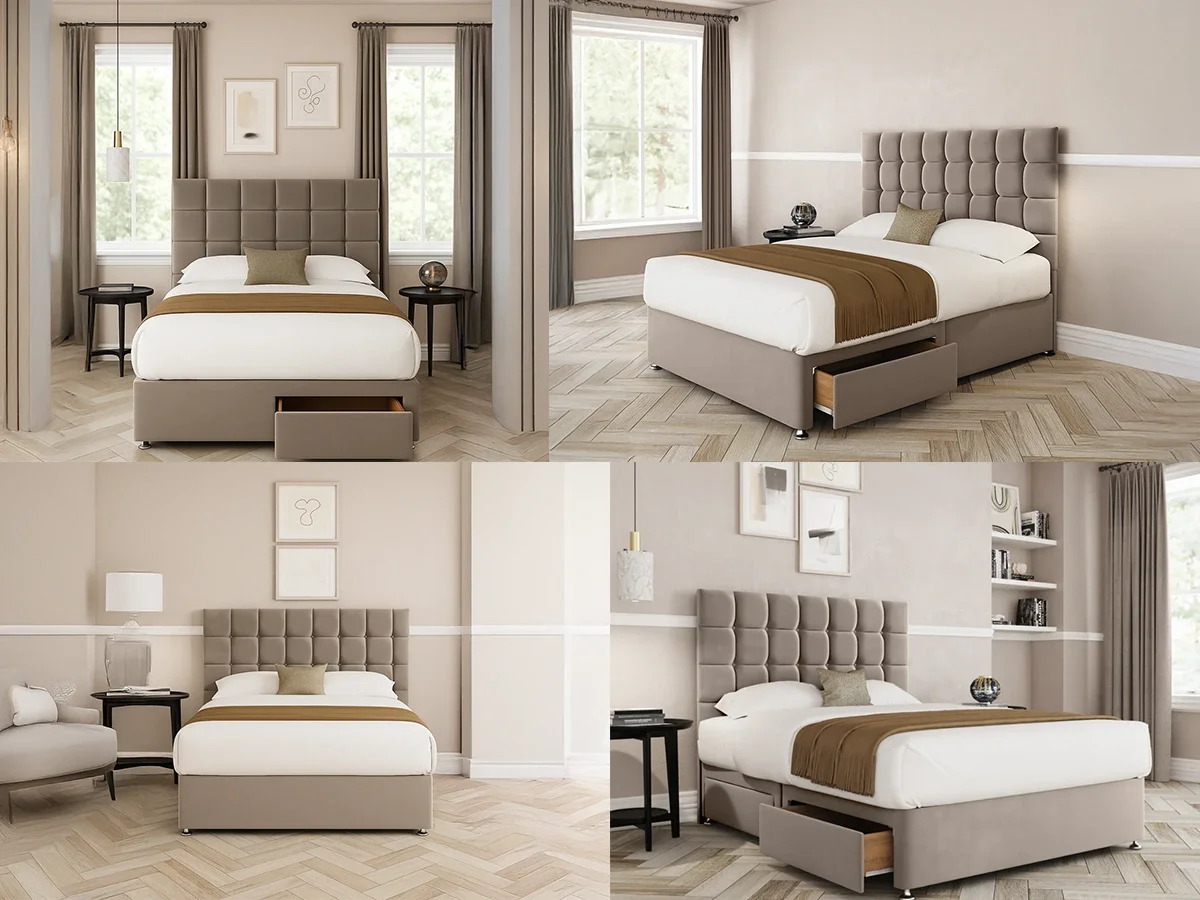
A super king bed measures 180cm wide and 200cm long, giving you around 30cm more sleeping width than a king size. That extra width is exactly why people want one, and why they hesitate if the main bedroom is modest.
Customer feedback often highlights the same concern: a big bed in a small room blocks the wardrobe, eats into the walkway, and makes everything feel boxed in. In practice, it usually comes down to layout rather than mattress size.
Measure the Room First
Start with the floor plan rather than the frame. Note the room’s length and width, the door swing, the radiator position, how the wardrobe doors open, and the access route from your front door to the bedroom. Customers often overlook the access route, but a large frame still has to get through the hallway and up the stairs before you can assemble it.
Room size gives you a quick sanity check, so run that check before you commit to a particular frame. For new homes in England, the nationally described space standard sets a minimum double bedroom size of 11.5m², with at least one double bedroom 2.75m wide. Built-in wardrobes cannot reduce that effective width, so that 2.75m is floor space you can genuinely use.
Now picture it: you are standing in the doorway of a bedroom that width, with a 180cm frame running along the wall in front of you. That leaves 95cm of floor space. Split that in two and each side of the bed gets about 47cm, roughly the width of one bedside table, with nothing spare to walk through. You can still get in and out, but you will do it sideways, and the room will feel like a corridor with a mattress in it.
None of that rules the room out. It simply shows where the spare space has to go, and there are two sensible ways to use it. Either you keep one proper walkway and accept a squeeze on the other side, or you push the frame against a wall so all 95cm becomes one route you can actually use. The clearance figures below tell you which of those layouts you are choosing. Do the same sum with your own tape measure and you will know within a minute whether a super king bed can work, and which side has to give.
A 12ft by 12ft room (roughly 3.66m square) is far more forgiving. The same frame leaves about 93cm on each side, which clears the walkway distances below on both sides at once.
The 60cm Clearance Rule (And When 75cm Is Better)
Here is the number that settles it: keep at least 60cm of clear floor on every side of a super king bed that you actually walk down. Sixty centimetres is enough to pass, make the bed, and open a bedside drawer without turning sideways. Go tighter and you will catch your shin on the frame most nights.
Treat 60cm as the working minimum, not the target. It is a layout convention rather than a regulation, and the formal figures sit higher: where accessible-home standards apply, Building Regulations clearance guidance sets a 750mm clear access route and a metre of clear space in front of storage furniture. In a room you use twice a day, that extra width is noticeable. In a 2.75m bedroom, you cannot reach 60cm on both sides at once, so protect the side you use most often (and the route to the door), then let the other side take the squeeze.
Two clearances are easy to miss. A hinged wardrobe needs door swing plus standing space, so allow closer to a metre in front of it. Ottoman bases lift from the foot or the side, so check which version your layout can accommodate before you order.
Can You Fit a Super King Bed In a Small Room?
Usually yes, as long as you accept that one side will have to give. Four decisions do most of the work, and the first is the one your measurements have already pointed to.
- Place the bed against the longest wall. This keeps the leftover floor space in one usable strip instead of two narrow ones, and it helps keep the door swing clear.
- Keep bedside furniture slim. Bedside tables are commonly made 40cm to 50cm wide, which would swallow the 47cm gap in that example on its own. A narrow table, floating shelf, or wall light with a small ledge does the same job with less bulk.
- Go vertical. Tall, narrow storage, full-height curtains, and wall lights (instead of table lamps) free up floor space and draw the eye upwards, making the room feel taller.
- Stick to a light colour scheme. Pale walls, bedding, and flooring bounce light and soften the edges of large furniture, so the frame feels like part of the room rather than an obstacle. Dark bedding in a small room does the opposite.
If you are still weighing up the size itself, our guide to upgrading to a super king sets out the comfort case, and the super king buying guide covers sizing and frame styles in more detail.
Bed Placement Ideas for Super King Beds
Bed Against the Wall

Super king bed positioned in the corner of a small bedroom
Pushing one long side of the frame against a wall creates one wide walkway instead of two narrow gaps. It works well in guest rooms and box rooms, and for single sleepers. For couples, it means one person may need to climb over the other, so decide whether that trade-off feels acceptable before you commit to the layout (not after the bed arrives).
Bed Against the Window

Super king bed placed against the window wall of a compact bedroom
Sometimes the window wall is the only uninterrupted stretch long enough for the frame. Choose a low headboard to preserve the light, keep the sill and radiator clear, and make sure the curtains can close without snagging on the bedding. This layout works well when the door and wardrobe take up the other walls.
Bed In the Centre of the Room

Super king bed centred in a small bedroom with a walkway on both sides
Centring the bed is a common styling tip, but it is the most space-hungry option in a small bedroom with a super king. Because symmetry creates two walkways rather than one, it only works if you can still keep at least 60cm of clearance on both sides once bedside tables are in place. A room around 3.5m wide can manage that; a 2.75m room cannot. Keeping the room easy to move around at 2am makes it calmer to live in, and there is a real link between sleep and mental health worth protecting.
How to Style a Big Bed In a Small Bedroom
A super king bed takes up most of the visual space in a compact room, so styling here is about keeping the eye moving rather than piling on layers. A calm, uncluttered bedroom is easier to settle into at the end of the day, and it takes less styling than most people expect. Seven small choices make most of the difference:
- Match the wall to your headboard. A dark headboard against a pale wall reads as one big rectangle, so paint the wall behind it in a similar tone and the frame settles into the background. Anything from the same colour family works.
- Check the lampshade from the pillow. Sit up in bed, and if the shade overhangs the table or sits above your eyeline, it is too big to look right next to a super king bed.
- Use wall lights instead. They free up the whole table surface, which counts when you are working with a slim 30cm to 40cm table.
- Stop at two pillows and one cushion. Anything more will look busy in a tight room, and you will need to move it all at least twice a day.
- Add one throw, folded at the foot. It breaks up the bedding without giving you another thing to store at bedtime.
- Let the floor show. Bedside furniture on legs and a clear walkway keep the room feeling open, and a rug should either run under the bed or be left out.
- Hang one tall picture above the headboard. A single vertical piece pulls the eye up the wall, whereas a wide gallery arrangement makes the same wall look squat.
And remember, comfort still comes down to choosing a mattress for your sleeping style rather than the size upgrade alone.
Choosing a Frame That Does Not Dominate the Room
Everything above leads to the same shortlist: a low-profile frame with no footboard, one with slim upholstered sides, or a divan base with a compact skirt. In a small bedroom, ottoman storage beds earn their place because the storage sits within the footprint the bed already occupies. That is one reason customers choose them as much for practicality as for looks. Ask for fabric samples before you choose a colour, since the pale shades that keep a small room feeling light can look very different under a north-facing window.
If you are replacing the mattress at the same time, bed and mattress bundles keep the sizing consistent. It is also worth reading whether a better mattress pays off before you split the budget.
Frequently Asked Questions
Can a super king bed fit into a small bedroom?
Yes, in most cases, provided you plan the walkways before you buy. The deciding factors are often the access route, door swing, and wardrobe position rather than the total floor area, so measure the hallway and stairs as well as the room.
What is the minimum recommended walking space around a super king bed?
Allow 60cm as a practical minimum on each side you will use, and aim closer to 75cm where the room allows. Measure from the bed frame, not the mattress, because upholstered sides and divan bases can add several centimetres to the overall width.
Should I get a bed with a footboard if my bedroom is small?
A footboard adds length to the frame and creates a visual barrier at the end of the bed, which is the last thing a narrow room needs. If you like the look, choose one that is low and open rather than solid, and make sure it does not interfere with the door swing.
How do I fit wardrobes into a small bedroom with a super king bed?
Sliding doors remove the need for swing clearance, which often gives you back the 60cm you need beside the bed. Tall narrow units, an alcove fitted with hanging rails, and built-in storage across the headboard wall all use height instead of floor space.
How can I make a small room with a super king bed look bigger?
Keep the floor visible around the frame, hang a mirror that reflects the window, and choose bedside storage on legs. Bedding in one pale tone, rather than several, also reduces the bed’s visual weight.
Need Help Choosing the Right Super King Bed?
If you have measured your bedroom but you are still unsure whether the frame will fit, or which base and storage option best suits the space, we can talk it through before you order. We will check the sizes against your room and access route, suggest frame styles that work well in smaller bedrooms, and send fabric samples so you can see the colour in your own light.
Our bed specialists are just a message away. You can reach us by email at [email protected] or call us on 0800 844 5982.